
Usage-Based AI Pricing: An Under-Recognised Inflection in Dynamic Pricing Dynamics
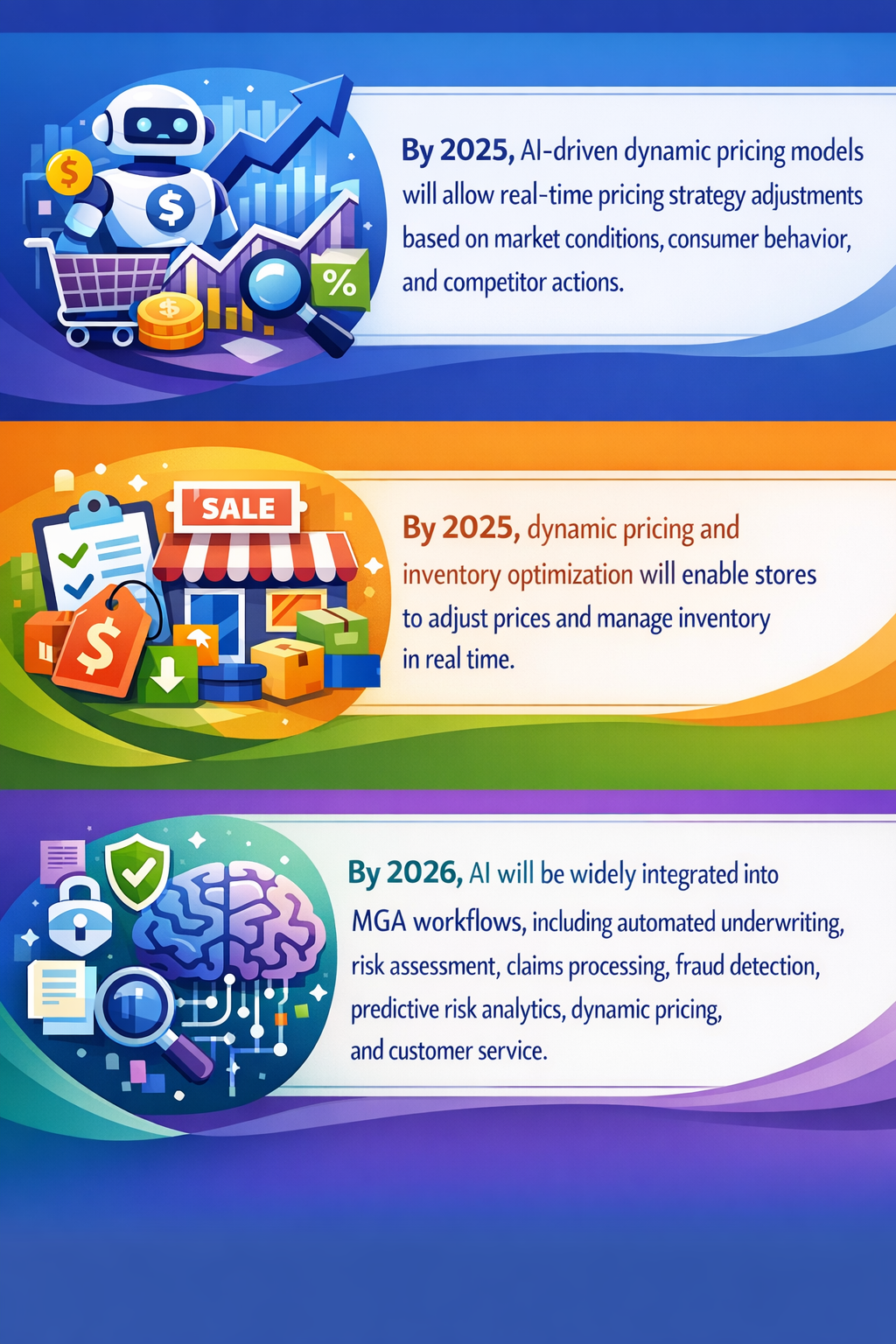
Usage-based AI pricing models represent an emerging inflection that could fundamentally remake dynamic pricing paradigms across multiple sectors. This weakly signalled shift—distinct from conventional subscription or fixed-tier models—is poised to reshape capital flows, regulatory approaches, and industrial configurations over the next decade.
Dynamic pricing has long centered on demand elasticity, seasonality, and consumer segmentation. However, the introduction of AI-driven usage-based pricing by enterprise software providers like Salesforce challenges traditional pricing architectures. This evolution signals a broader transition toward granular, continuous value capture models tied directly to AI-enabled utility and consumption patterns.
Signal Identification
This is an emerging inflection indicator rather than transient noise or widely recognised trend. Its novelty lies in tying price directly to AI service intensity at an enterprise level, rather than product or user counts. The signal is nascent yet plausible for high scalability given the rapid AI adoption trajectory and enterprise SaaS (Software as a Service) market dynamics. Time horizon estimates range from 5–10 years for broad sector adoption to 10–20 years for full structural transformation. The plausibility is medium; adoption depends on AI’s value transparency, enterprise willingness, and market competition dynamics. Exposed sectors encompass SaaS software, cloud infrastructure, retail, manufacturing, and regulated industries where pricing precision affects compliance and reporting.
What Is Changing
The foundational shift reflected in Salesforce’s move to usage-based AI pricing reflects a new granularity in monetizing AI capabilities integrated into software platforms (Cirra AI 27/04/2024). Unlike fixed subscription tiers based on user seats or feature bundles, usage-based pricing captures the intensity of AI model queries, compute cycles, or outcomes generated, aligning cost with actual value extracted. This approach redefines customer relationships from transactional to continuous value tracking, enabling dynamic adjustments tailored to enterprise patterns and AI workload spikes.
Previous dynamic pricing paradigms focused primarily on external demand factors (season, market conditions). This usage-based AI pricing signals an internal, operational basis for pricing that hinges on AI’s involvement in business processes, decision-making, and automation outcomes (Cirra AI 27/04/2024). It foregrounds data-driven, adaptive pricing models intrinsically linked to AI computational resources and output quality. Such algorithmic pricing may increasingly leverage real-time telemetry and contextual metadata, creating a feedback-rich environment affecting vendor negotiation leverage and buyer cost predictability.
Not widely recognised to date is that this inflection could erode established industrial structures, including SaaS vendors’ capital investment profiles, pricing governance frameworks, and market positioning. Traditional SaaS companies rely on stable, predictable revenue via fixed subscription fees, supporting defined R&D and sales expenses. Transitioning to fine-grained AI usage pricing introduces revenue volatility and potential capital flight shifts as enterprises gain flexibility to optimize AI consumption or switch providers rapidly, also altering risk profiles for financiers and policymakers.
Disruption Pathway
The scaling of usage-based AI pricing could unfold through a convergence of conditions. First, as enterprises deepen AI integration across workflows, standardized metrics on AI consumption and impact will emerge, enabling vendors to confidently price on outcomes rather than inputs. Enhanced observability and auditability in AI model usage may catalyse this transparency.
Subsequently, enterprises will exert pressure on SaaS vendors for more aligned costs reflecting actual utility versus fixed commitments, especially in volatile operational environments. This demand drives supply-side innovation in billing infrastructures and contract models able to accommodate variable AI workloads.
Existing subscription-based pricing structures will come under stress from increased revenue unpredictability, pushing SaaS firms toward more agile capital management and investment strategies. Investors may revalue SaaS businesses differently, favouring those able to embed adaptive pricing with robust AI monitoring. This may precipitate consolidation in the sector as firms unable to adjust capitally face margin compression.
Regulatory adaptation may follow as pricing transparency issues emerge for AI-intensive products, especially where AI outputs affect regulated activities (finance, healthcare). New frameworks may mandate disclosure of AI usage metrics underlying prices or cap usage-based fees to prevent exploitative volatility.
Importantly, emergent feedback loops could exacerbate inequalities as larger enterprises with better AI telemetry and optimization achieve cost advantages, marginalising smaller players and altering competitive dynamics. This could foment calls for regulatory intervention or formation of industry standards for AI pricing fairness, challenge dominant SaaS vendor lock-ins, and incentivise multi-vendor AI ecosystems.
Why This Matters
Strategically, senior decision-makers must consider how usage-based AI pricing might reshape capital allocation within technology portfolios. Investments increasingly need to factor in pricing model volatility and associated revenue risks, altering valuations and funding appetite for SaaS providers and AI infrastructure vendors.
Regulators face challenges in overseeing pricing fairness and transparency across AI ecosystems. This novel pricing model disrupts classical consumer protection and antitrust frameworks that focus on list prices and subscriptions. Monitoring frameworks must evolve to track AI consumption patterns and their economic impacts.
Industrial structure may shift towards a bifurcated SaaS landscape: firms excelling in AI usage metering and billing technology versus traditional subscription-heavy suppliers. Supply chains supporting AI compute, telemetry instrumentation, and billing analytics could gain strategic importance.
Governance models will need to address liability and compliance as price fluctuations driven by AI usage intensity may affect contract enforceability, procurement policies, and audit practices. Decision-makers should thus monitor regulatory initiatives on AI transparency and pricing controls, and adapt competitive strategies accordingly.
Implications
Usage-based AI pricing may catalyse a structural pivot from fixed to fluid value capture in digital service industries. SaaS companies might need to reorient development and deployment to foreground real-time consumption analytics and outcome measurement capabilities. Capital deployment decisions could shift towards platforms offering scalable AI metering and adaptable billing infrastructures.
Regulatory regimes likely will evolve to impose transparency and fairness obligations around AI usage billing, possibly defining standards akin to telecom usage reporting. Failure to adapt may expose incumbents to reputational and compliance risks.
Competitive dynamics could tilt towards enterprises with advanced AI consumption optimisation skills, amplifying a digital divide within sectors. However, this development is not a guaranteed transformation; it may not supplant fixed subscription systems entirely but coexist as hybrid models depending on sector and customer sophistication.
Competing interpretations exist. Some market participants may view usage-based AI pricing simply as an incremental refinement within SaaS pricing rather than a systemic inflection. Others caution this may cause customer backlash if perceived as opaque or unpredictably costly. Both views merit consideration in scenario modelling.
Early Indicators to Monitor
- Patents filed relating to AI consumption metering, real-time billing, and outcome-based pricing mechanisms.
- Procurement policies increasingly incorporating AI usage variability clauses or outcome-based SLAs (Service Level Agreements).
- Regulatory consultation drafts addressing transparency and fairness in AI service pricing.
- Venture funding concentration in startups focused on AI analytics and billing platforms.
- Capital reallocation trends among SaaS vendors emphasizing AI metering and elastic pricing capabilities.
Disconfirming Signals
- Persistence or resurgence of flat-rate or fixed-tier SaaS pricing despite AI integration advancements.
- Enterprise pushback against variable pricing models citing budgeting unpredictability.
- Regulatory bodies declining to intervene or impose transparency mandates on AI usage billing.
- Insufficient development in AI usage telemetry technologies limiting visibility.
- Dominant SaaS vendors rejecting usage-based AI pricing in favour of hybrid or legacy models.
Strategic Questions
- How can capital allocation strategies incorporate the uncertainties and opportunities arising from usage-based AI pricing models?
- What regulatory frameworks should be developed to ensure fair and transparent AI usage pricing without stifling innovation?
Keywords
Dynamic Pricing; Usage-Based Pricing; AI Monetization; Enterprise SaaS; Pricing Transparency; Regulatory Frameworks; Capital Allocation
Bibliography
- Going forward, Salesforce indicated that it will offer more usage-based AI pricing options. Cirra AI. Published 27/04/2024.
- AI adoption driving shifts in SaaS revenue models. Forbes Technology Council. Published 11/02/2024.
- Regulatory scrutiny over AI pricing models expected to rise. Federal Trade Commission. Published 12/12/2023.
- Cloud infrastructure providers expand metering capabilities for AI workloads. TechCrunch. Published 05/03/2024.
- Standardizing AI usage metrics critical for market transparency. International Organization for Standardization. Published 20/01/2024.