
Beyond Weight Loss: The Latent Cardiometabolic and Longevity Disruption in Diet Drug Markets
GLP-1 receptor agonists, pioneered by blockbuster drugs like liraglutide and semaglutide, have revolutionized obesity treatment. Yet, a non-obvious, underappreciated shift is emerging: their cardiometabolic and potential longevity benefits could fundamentally disrupt drug development, regulation, and industrial structure beyond mere weight management. This insight reveals a silent inflection point with wide-reaching strategic implications for capital allocation and governance over the next two decades.
While global demand for GLP-1-based obesity drugs skyrockets, the broader metabolic benefits—especially cardiovascular risk reduction and anti-inflammatory effects—are not yet clinically or regulatorily recognized at scale. This latent therapeutic dimension, coupled with impending patent expirations and evolving real-world usage patterns, hints at a multidimensional structural shift. Capturing this weak signal is crucial for stakeholders challenged to anticipate regulatory evolutions, competitive pressure from biosimilars, and redefined therapeutic markets.
Signal Identification
This development qualifies as a weak signal with emerging trend characteristics due to its nascent clinical recognition outside indications for weight loss and diabetes. It spans a 10–20 year horizon with a medium to high plausibility, as it relies on accumulating clinical evidence and regulatory receptivity that have yet to fully materialize. The sectors most exposed include pharmaceutical R&D and manufacturing, healthcare payers and providers, regulatory authorities, and industrial investors focused on metabolic and longevity therapeutics.
What Is Changing
GLP-1 receptor agonists such as liraglutide and semaglutide currently generate approximately $12 billion annually, predominantly driven by their obesity and type 2 diabetes indications (Pengting Peptide 04/10/2023). Patent expirations between 2025 and 2028 threaten to unleash biosimilar competition, forcing incumbent firms to seek additional value beyond weight loss (Pengting Peptide 04/10/2023).
Simultaneously, real-world data indicates a rapid increase in the user base—from 5 million in 2023 to an estimated 25 million Americans on GLP-1 treatments by 2030 (JPMorgan 23/03/2024). While weight loss has traditionally dominated therapeutic value perceptions, emerging clinical findings suggest that one-third of cardiovascular risk reduction from GLP-1 drugs is independent of weight loss itself. These drugs reduce chronic inflammation, improve metabolic health, and lower heart attack and stroke incidence via as-yet imperfectly understood mechanisms (BBC Future 14/08/2026).
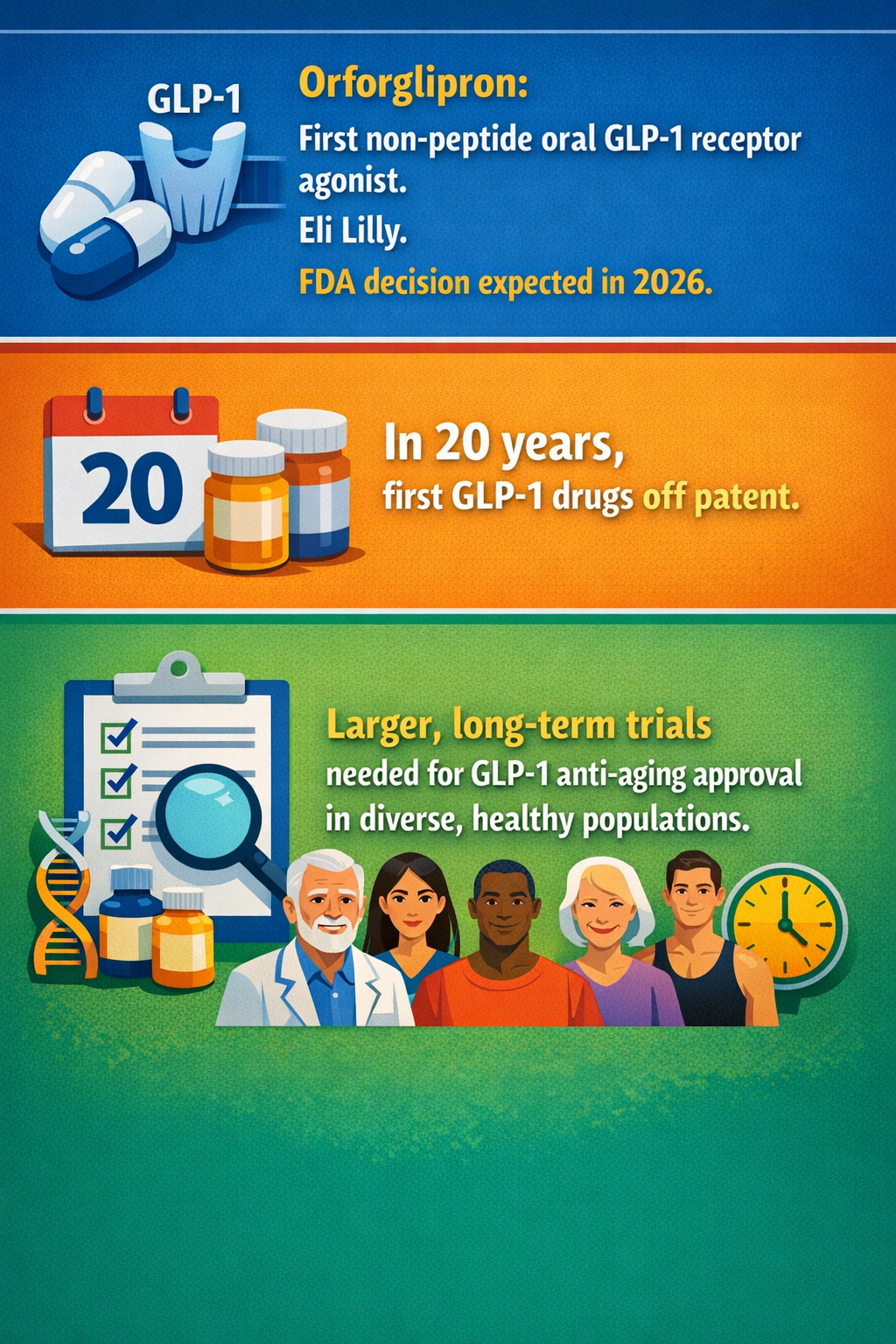
Crucially, regulatory authorities like the U.S. Food and Drug Administration (FDA) remain reticent to grant longevity or anti-aging indications due to evidence gaps and safety concerns (Medical Daily 02/02/2026). However, the metabolically restorative properties observed could presage a paradigm shift, positioning GLP-1 analogues as foundational therapeutics in cardiometabolic prevention and potentially healthy aging.
Current discourse focusses on patent cliffs and obesity market expansion, but less understood is how GLP-1 drugs could redefine industrial and regulatory frameworks by transitioning from symptomatic weight loss agents toward bona fide disease-modifying cardiometabolic drugs (BuzzFeed News 20/03/2026). This under-recognised inflection challenges classical single-indication drug paradigms and invites reconsideration of intellectual property strategy, reimbursement models, and long-term health governance.
Disruption Pathway
As patent expirations unlock biosimilar competition circa 2025–2028, issuer revenue growth from GLP-1 drugs may plateau, incentivizing reinvention through indication expansion. This reinvention depends on generating robust clinical evidence on cardiovascular and metabolic endpoints beyond weight loss, a process catalyzed by ongoing observational studies and mechanistic research (BBC Future 14/08/2026).
Widespread off-label use for cardioprotective benefits could mushroom, pressuring regulators to reconsider approvals and labeling. Increasing public awareness of these benefits outside the obesity niche may also drive payer demand for coverage in broader prevention frameworks. These forces, combined with aging populations grappling with multimorbidity, may stress conventional polypharmacy models and catalyze merged cardiometabolic therapeutic classifications.
Subsequent adaptations could include new regulatory pathways accommodating multi-indication or pleiotropic-effect therapeutics, with accompanying intellectual property innovations such as indication-specific exclusivities or platform patents. Industry incumbents might pivot from volume-driven obesity sales to more personalized, stratified medicine models focusing on cardiometabolic risk profiles. Health systems could integrate GLP-1 analogues into long-term disease management protocols, transforming patient adherence norms.
Feedback loops are plausible whereby enhanced cardiovascular outcomes decrease hospitalization rates, altering healthcare expenditure patterns and reimbursement models. This could incentivize earlier intervention with GLP-1 drugs, increasing market size while shifting the industrial ecosystem from episodic obesity treatment to continuous cardiometabolic management. However, unintended consequences include complex liability landscapes as off-label or expanded indications evolve under uneven regulatory oversight.
Under such dynamics, the dominant pharmaceutical model—where patent-protected, single-use indication drugs command high premiums—could fragment. Biosimilars and next-generation GLP-1 analogues may compete on differentiated cardiometabolic efficacy and safety, stimulating innovative R&D investments and reshaping competitive positioning long after patents expire.
Why This Matters
Capital allocators must reconsider investments in obesity drug frontrunners by incorporating risks and opportunities linked to patent expirations and emergent cardiometabolic indications. Funding strategies could shift towards clinical programs validating pleiotropic drug effects and focusing on long-tail patient populations with subclinical metabolic inflammation.
Regulators face decision complexity, balancing robust evidence requirements against accelerated approval pressures amid widespread off-label use. Anticipating new evidentiary standards and regulatory pathways could help mitigate risks of adverse events or market confusion, especially as demand expands beyond traditional obesity indications.
Industrial competitors and biosimilar manufacturers may redefine value propositions from cost-effective weight loss to multi-parameter cardiometabolic therapies, influencing supply chain configurations, particularly raw materials for peptide synthesis. Healthcare systems might reengineer reimbursement and diagnostic coding standards, favoring integrated metabolic care that could reduce long-term costs but increase short-term pharmaceutical expenditure.
Liability frameworks may evolve as expanded indications surface nuanced patient safety profiles and polypharmacy interactions, compelling stronger pharmacovigilance and real-world data infrastructures. Governance models overseeing drug safety, marketing, and off-label promotion could be reshaped.
Implications
This development could plausibly lead to multi-indication GLP-1 drugs forming a new therapeutic class underpinning cardiometabolic disease prevention and possibly longevity extension. Such a shift might expand market sizes and reshape health ecosystems around chronic disease management.
Conversely, it should not be mistaken as a nascent anti-aging revolution guaranteed to unlock new longevity drugs imminently. Current FDA skepticism underscores evidence gaps and safety concerns that limit short-term transformative impact (Medical Daily 02/02/2026).
Alternative interpretations might frame GLP-1 cardiometabolic benefits as secondary effects insufficient for regulatory reclassification or structural industrial shifts. There is also risk that biosimilar competition depresses innovation incentives, fragmenting the market rather than consolidating multimorbidity treatment paradigms.
Early Indicators to Monitor
- Increased clinical trial registrations investigating GLP-1 drugs for cardiovascular, inflammatory, or aging-related endpoints.
- FDA or EMA draft guidances related to multi-indication or pleiotropic drug approvals for metabolic diseases.
- Patent filings for next-generation GLP-1 analogues emphasizing cardiometabolic or anti-inflammatory properties.
- Shifts in payer reimbursement policies to cover GLP-1 drugs for broader cardiometabolic risk reduction.
- Venture capital and corporate R&D funding clustering around pleiotropic metabolic therapeutics and combination therapies.
Disconfirming Signals
- Clear regulatory rejection or withdrawal of applications for GLP-1 indications beyond weight loss and diabetes.
- Emergence of significant adverse effects linked to off-target cardiometabolic use limiting clinical utility.
- Failure of biosimilars to gain market traction due to persistent brand loyalty or narrow indications.
- Stagnation in clinical evidence linking GLP-1 drugs to meaningful cardiovascular or longevity outcomes.
- Consolidation of obesity treatment market around non-GLP-1 mechanisms distracting investment away from this class.
Strategic Questions
- How should pharmaceutical companies pivot R&D and lifecycle strategies in anticipation of multi-indication cardiometabolic markets reshaping post-patent dynamics?
- What regulatory innovations or new frameworks might be necessary to adequately evaluate and govern pleiotropic GLP-1 therapeutics in cardiometabolic and aging-related indications?
Keywords
GLP-1 receptor agonists; patent expiration; cardiometabolic drugs; biosimilars; regulatory frameworks; longevity therapeutics; strategic intelligence
Bibliography
- A: The most significant expirations include patents for GLP-1 receptor agonists like liraglutide (2025-2026) and semaglutide (2026-2028), which currently generate $12 billion annually. Pengting Peptide. Published 04/10/2023.
- Approximately 25 million Americans will be on GLP-1 treatment by 2030, up from around 10 million in 2025, 6 million in 2024 and 5 million in 2023. JPMorgan. Published 23/03/2024.
- GLP-1 drugs have been found to reduce inflammation, improve metabolic health and reduce the risk of heart attacks and strokes, with weight loss only accounting for one-third of the reduced cardiovascular risk. BBC Future. Published 14/08/2026.
- The FDA is not expected to act on any longevity indication for GLP-1 drugs in the near term. Medical Daily. Published 02/02/2026.
- Keep in mind that, in 20 years, the first round of GLP-1 drugs will be off patent. BuzzFeed News. Published 20/03/2026.