
The Emerging Geo-economic Shift: New Frontiers of Global Power and Influence
The global geopolitical landscape is undergoing an incremental yet significant transformation that may redefine how economic and strategic influence is wielded in the coming decades. Beyond traditional military and diplomatic arenas, a weak but growing signal points to the weaponization of economic tools and an expansion of strategic frontiers—such as the Arctic, outer space, and new governance institutions—that could disrupt established global orders. This shift hints at a future where economic confrontation and alternative multilateral frameworks could reshape industries, governance, and international relations in unforeseen ways.
What’s Changing?
Several recent developments indicate a complex, shifting dynamic in global governance and power structures. A notable trend is the increasing role of geo-economic confrontation, where economic policies and trade instruments are progressively used as strategic tools to gain geopolitical advantage. Global leaders have flagged the rise of this confrontation as one of the top emerging threats, as countries weaponize tariffs, sanctions, and financial controls to influence rivals and realign international alliances (Al Jazeera).
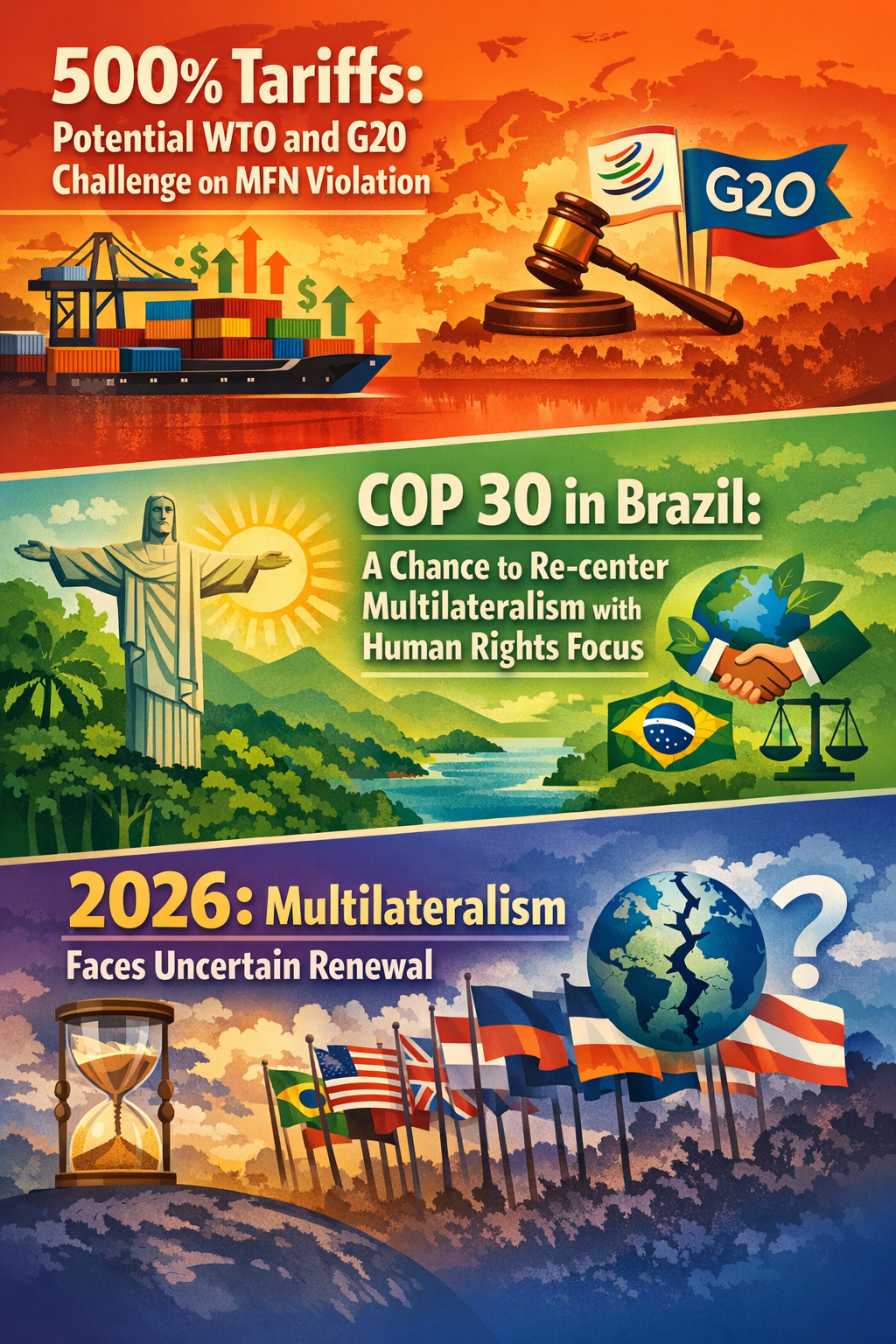
The BRICS bloc, under India’s 2026 chairmanship, exemplifies attempts to reconfigure global governance institutions amid frustrations with Western-led multilateralism. India’s presidency plans to push reforms and introduce new instruments to recalibrate the global power balance to better reflect the interests of emerging economies (TV BRICS). This reflects a broader multipolar world order where conventional cooperation frameworks such as the World Trade Organization (WTO) and G20 face unprecedented strain and challenges, especially over contentious trade practices like tariff disputes (Insights on India).
Meanwhile, the strategic interest of major powers is shifting to new frontiers beyond traditional geographies. Beijing and Moscow’s collaborative engagement in the Arctic and outer space signals efforts to leverage these domains for global influence expansion, including military capabilities alongside economic and governance footprints (MERICS). The Arctic in particular—with its untapped natural resources and novel shipping routes due to climate change—could become a hotbed of geopolitical competition between global powers.
Parallel to geopolitical maneuvering, defence spending adjustments, like Canada’s, suggest increased alignment among actors seeking alternatives to the perceived unpredictability of current US unilateralism, fostering new security coalitions around shared interests and values (Fraser Institute).
Underlying these developments is a growing consensus among emerging economies that the post-World War II multilateral framework may be collapsing. Brazil’s President Lula da Silva emphasized the urgent need for new inclusive governance arrangements, citing over 50 countries expressing interest in joining BRICS as a potential game-changer in global governance (BRICS Grain).
Why is This Important?
The weaponization of economic tools and the push for new governance systems challenge the predictability of international cooperation. Industries operating transnationally—especially in trade, finance, energy, technology, and defence—could face growing uncertainty. The erosion of multilateral consensus may fragment regulatory frameworks, increasing compliance complexity and raising operational risks across markets.
New strategic frontiers like the Arctic and outer space present both commercial opportunity and geopolitical risk. The possibility that these domains become arenas for power projection rather than cooperative development may complicate innovation and investment prospects. For example, access to rare earth elements and shipping lanes in the Arctic might be curtailed or heavily regulated according to emergent power blocs, disrupting global supply chains.
Emerging economies’ increasing role in shaping governance may recalibrate international norms and standards, potentially creating more equitable participation but also fragmented regulatory regimes. This evolving architecture could influence everything from trade dispute mechanisms to collective action on climate change and artificial intelligence governance, necessitating adaptive strategies from all stakeholders.
Implications
Industries, governments, and research institutions will likely need to:
- Adapt to a less certain and more fragmented global economic order, monitoring shifts in trade policies, sanctions, and tariff regimes reflecting geopolitical contests.
- Invest in scenario planning for new strategic frontiers, assessing the risks and opportunities associated with Arctic routes, resource extraction, and space-based infrastructure.
- Engage with emerging governance coalitions such as BRICS to understand and influence new standards and rules that may affect global markets and regulatory environments.
- Reevaluate supply chain resilience, as geopolitical tensions and economic weaponization may cause sudden disruptions or shifts in trade corridors.
- Monitor defence sector trends as increased spending by middle powers suggests evolving security alliances and shifting threat perceptions that could influence industry demand and government policies.
- Prepare for increased complexity in multilateral negotiations, requiring greater diplomatic agility and the capacity to operate across multiple overlapping institutional frameworks.
Organizations ignoring these weak signals might face strategic surprises, such as sudden exclusion from key markets or unexpected regulatory changes. Conversely, proactive engagement could uncover new partnerships and growth avenues in emerging political-economic alliances.
Questions
- How prepared is your organization to operate across an increasingly fragmented and multipolar global economic system?
- What strategies do you have in place to monitor and respond to the weaponization of economic tools by rival states or blocs?
- Have you conducted thorough risk assessments relating to new strategic frontiers such as the Arctic or outer space relevant to your industry?
- In what ways can your sector engage with emerging coalitions like BRICS to influence governance standards and preserve market access?
- How might changes in global defence spending and security alliances impact your operational and strategic planning?
- What contingency plans exist for supply chain disruptions caused by geopolitical-economic confrontations?
Keywords
geo-economic confrontation; multilateralism reform; BRICS; Arctic geo-strategy; outer space influence; weaponization of economics; emerging economies; global governance reform
Bibliography
- A significant part of India’s chairmanship will be devoted to reforming global governance institutions and exploring new instruments to shape the global balance of power and interests, including within BRICS. TV BRICS. https://tvbrics.com/en/news/outcomes-of-brazil-s-brics-chairmanship-tackling-inequality-climate-agenda-and-new-approaches-to-ai-/
- New Delhi's presidency offers significant opportunities - yet also unavoidable challenges - at a moment when the very idea of multilateralism is under strain. The Diplomat. https://thediplomat.com/2026/01/indias-2026-brics-presidency-multilateralism-multipolarity-and-the-venezuelan-test/
- The risk of geoeconomic confrontation is rising as the world enters a new age of competition with economic tools increasingly weaponised as extensions of geopolitical strategy amid a broader retreat from multilateralism. Al Jazeera. https://www.aljazeera.com/news/2026/1/14/geoeconomic-confrontation-worlds-top-threat-global-leaders-say
- Ottawa's substantial increase in defence spending could encourage further cooperation with countries seeking to establish a new world order in the wake of the new American unilateralism. Fraser Institute. https://www.fraserinstitute.org/commentary/year-review-canada-weathers-first-year-trumps-second-term
- A coordinated challenge at the WTO or G20 could question 500% tariffs as violations of MFN obligations. Insights on India. https://www.insightsonindia.com/2026/01/09/upsc-current-affairs-9-january-2026/
- Beijing views the strategic new frontiers as providing new opportunities to advance its objective of expanding its global influence at the expense of Western countries, from military capabilities to global governance. MERICS. https://merics.org/en/report/arctic-outer-space-and-influence-building-china-and-russia-join-forces-expand-new-strategic
- Brazilian President Lula da Silva warned of an unprecedented collapse of multilateralism, emphasizing the need for new, inclusive frameworks like BRICS that prioritize the interests of emerging economies. BRICS Grain. https://www.bricsgrain.com/50-nations-seeking-brics-membership-a-game-changer-for-global-geopolitics/