
The Rise of Cyber-Autonomous Supply Chain Vulnerabilities: An Underrecognized Inflection
Emerging autonomous AI threat actors targeting supply chain and industrial control systems introduce a weak signal likely to reshape cybersecurity governance and capital flows. Understanding this subtle shift is critical for senior leaders facing heightened systemic risks over the next two decades.
The integration of autonomous offensive AI tools capable of executing advanced persistent threats at scale against critical infrastructure and connected supply chains represents a distinct, underappreciated cybersecurity inflection. While ransomware surges and AI-enhanced defenses dominate headlines, the covert evolution of AI-driven exploratory cyberattacks — especially those targeting industrial Internet of Things (IIoT) ecosystems and building automation — signals a potential paradigm shift. This trend may destabilize existing capital allocation assumptions, compel regulatory overhaul, and reconfigure industrial structures focused on cyber resilience.
Signal Identification
This development qualifies as an emerging inflection indicator. It transcends incremental threat evolution by incorporating autonomous AI that can independently discover and exploit novel vulnerabilities within complex, interconnected operational networks such as utilities, manufacturing, and supply chains. This capability marks a systemic departure from manually orchestrated cyberattacks or conventional AI-assisted defense responses.
The plausibility band is assessed as high within a 10–20 year horizon due to current accelerating advancements in generative AI and autonomous cyber capabilities as exemplified by Anthropic’s Mythos model and expanding vulnerability reports in critical infrastructure systems (Industrial Cyber 07/04/2026; CrowdStrike 13/04/2026). Sectors exposed include utilities, energy, water, aviation (drones), building automation, and retail supply chains.
What Is Changing
First, autonomous AI is transitioning cybersecurity from a primarily defensive posture to an offence-capable domain where machines can perform exploratory reconnaissance, vulnerability discovery, and exploit execution without requiring human intervention (Industrial Cyber 07/04/2026). This advance represents a structural inflection from AI as a threat detection/support tool to AI as a primary actor in cyber offense.
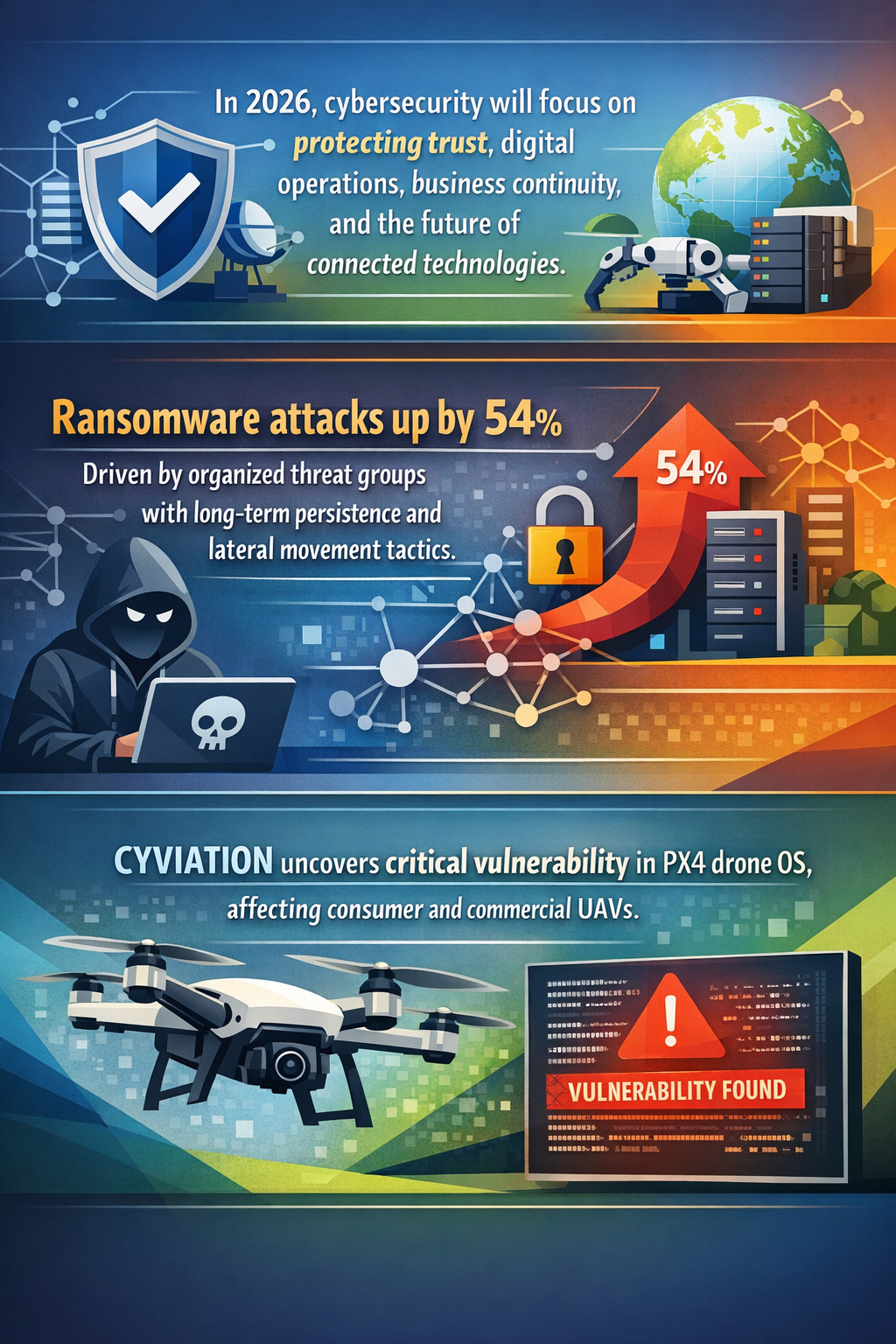
Second, critical infrastructure and IIoT ecosystems’ cybersecurity surfaces a concealed risk vector. Vulnerabilities documented in BACnet and Modbus building automation protocols illustrate systemic exposure of essential services to cyber intrusion with potential for cascading failures (Persistence Market Research 10/04/2026). Simultaneously, drone operating systems like PX4 exhibit critical weaknesses exacerbating the attack surface in logistics and aerial services (EPlane AI 14/04/2026).
Third, exploitation extends beyond static data theft or ransomware to dynamic supply chain disruption, as demonstrated by retailers such as Marks & Spencer suffering significant operational halts from cyber incidents (Retail Systems 15/04/2026). This implies digital operations continuity and trust—rather than mere IT security—are now the critical battlegrounds.
Finally, these developments are occurring amid improved but still fragmented intelligence sharing and regulatory awareness, which remain reactive to specific attacks rather than proactive systemic risk governance, particularly regarding autonomous AI-powered cyber threats (Smart IMS 20/04/2026; Digital Forensics Magazine 24/04/2026).
Disruption Pathway
As autonomous AI threat actors mature, their capacity to silently probe and exploit multiple interconnected supply chain nodes will accelerate. This progression is likely driven by the increasing complexity and scale of IIoT deployments combined with the AI arms race between offensive and defensive cyber actors (Industrial Cyber 07/04/2026).
This dynamic introduces stresses on existing cybersecurity frameworks that remain largely IT-centric, siloed within organizational boundaries and dependent on human threat intel analysis (BizTech Reports 01/04/2026). The gap between AI-driven offensive capabilities and slower adaptive regulatory or industrial responses could lead to widening systemic risk and exposure across sectors critical to national economic stability.
In response, novel regulatory frameworks and industrial practices may emerge emphasizing AI governance standards, autonomous defensive AI deployment, and cross-sector cyber risk sharing agreements. These adaptations might spawn new markets for AI-powered cyber resilience solutions integrating AI predictability and game theory into supply chain robustness strategies (Stanford Tech Review 19/04/2026).
However, unintended consequences might include a cyber escalation spiral, where offensive AI capabilities and defensive investments amplify each other, increasing systemic fragility unless accompanied by international governance coordination. Dominant industry models may shift from reactive incident response to proactive autonomous cyber risk management platforms embedded in operational technology rather than solely IT (CrowdStrike 13/04/2026).
Why This Matters
Understanding and anticipating autonomous AI-enabled cyber threats across supply chains and industrial control systems is crucial for decision-makers allocating capital in technology, critical infrastructure, and cybersecurity sectors. Misjudging this inflection risks underinvestment in AI-governed cyber defenses or regulatory framing capable of preempting systemic failures.
Regulators may need to revise frameworks to mandate AI robustness testing, transparency in AI cyber offense and defense capabilities, and inter-sector collaboration standards. Competitive positioning will favour firms embedding autonomous AI cyber resilience, while laggards could face disproportionate liabilities from supply chain disruptions or regulatory noncompliance.
Supply chains—particularly in energy, water, manufacturing, and retail distribution—are vulnerable to cascading impacts from AI-driven incursions. The shift in liability may move toward integrators and technology providers responsible for embedding secure AI controls within interconnected systems.
Implications
This inflection could plausibly drive a structural shift from traditional IT cybersecurity models toward integrated operational technology (OT) and supply chain cyber risk governance empowered by autonomous AI capabilities. Capital might increasingly channel into AI cyber resilience startups and industrial cybersecurity firms innovating beyond perimeter defence to predictive and autonomous response systems.
It could also catalyse regulatory innovation, potentially yielding new international norms on AI use in cyber operations akin to arms control treaties. However, this is not merely an acceleration of existing ransomware or data breach trends, which are better understood and more directly observable.
Competing interpretations might see autonomous AI threats as hype or manageable through conventional security evolution. Yet the persistent emergence of novel vulnerabilities in operational and IoT environments supports a more cautious perspective on systemic scaling.
Early Indicators to Monitor
- Increased regulatory mandates specifying AI governance in cybersecurity and supply chain risk frameworks
- Rising venture investment clustering on autonomous offensive and defensive AI cybersecurity technologies
- Public disclosures of zero-day vulnerabilities uncovered by AI in industrial control systems or IoT platforms
- Proliferation of cross-sector cyber risk sharing consortia and intelligence fusion centers involving AI threat analytics
- Standards body activity focusing on AI explainability, AI transparency, and autonomous cyber defense certification
Disconfirming Signals
- Significant slowing or plateauing of AI autonomous cyber offensive capabilities due to technical or ethical constraints
- Rapid maturation and adoption of AI defensive frameworks neutralizing autonomous threats before systemic scaling
- Failure of AI models to reliably navigate complex OT environments, limiting attack scope to traditional IT networks
- Regulatory fragmentation preventing cross-sector or international cooperation on autonomous AI cyber threat governance
Strategic Questions
- How can capital deployment and acquisitions anticipate the rise of autonomous AI cyber offense to protect future supply chain integrity?
- What regulatory frameworks and industry alliances must be established now to govern AI-driven cyber threats at scale?
Keywords
Autonomous AI; Cybersecurity; Supply Chain Cybersecurity; Industrial Control Systems; Operational Technology; Generative AI; Cyber Risk Governance; AI Arms Race; Critical Infrastructure Cybersecurity
Bibliography
- The Power of AI in Cybersecurity CrowdStrike's approach to AI in cybersecurity is multifaceted and continuously evolving. CrowdStrike. Published 13/04/2026.
- The emergence of advanced AI systems such as Anthropic's Mythos marks a turning point for cybersecurity. Industrial Cyber. Published 07/04/2026.
- The U.S. Cybersecurity and Infrastructure Security Agency has issued multiple advisories warning of vulnerabilities in building automation system protocols. Persistence Market Research. Published 10/04/2026.
- New York-based aviation cybersecurity company CYVIATION has uncovered a critical vulnerability within the PX4 drone operating system. EPlane AI. Published 14/04/2026.
- Collaboration between governments, enterprises, and cybersecurity firms has improved, leading to faster intelligence sharing and coordinated responses to global threats. Smart IMS. Published 20/04/2026.
- Gartner advises cybersecurity leaders to move beyond IT-centric compliance by formalizing collaboration with legal, business and procurement teams, and establishing shared accountability for cyber risk. BizTech Reports. Published 01/04/2026.
- The World Economic Forum's Global Cybersecurity Outlook highlights that AI-related vulnerabilities are among the fastest-growing cyber risks. Stanford Tech Review. Published 19/04/2026.